Introduction to dance for seniors
This article will guide you step by step to find the dance that best suits you, taking into account your physical condition and preferences. Styles like the waltz or salsa are perfectly suited for seniors.
Definition and importance of dance for older adults
Dancing is much more than just a hobby. For older people, it's a gentle and fun way to stay active, all while enjoying themselves. As time goes by, needs change, and it's essential to choose suitable physical activities. Dancing for seniors allows for work on both the body and mind, while being careful to respect age-related physical limitations.
Adapted dance concept for seniors
Dance classes for seniors are specially designed to be accessible to everyone, regardless of their fitness level. The movements are simplified, the rhythms are slower, and the focus is on safety and enjoyment. Whether it's the waltz, cha-cha, or line dancing, each style is adapted to ensure a pleasant and risk-free experience.
Physical and mental benefits of dancing for seniors
Dancing does more than just move the body, it also stimulates the mind. In addition to improving mobility, coordination and balance, it also strengthens memory and concentration. Dancing regularly helps seniors feel more alert, less stressed and much happier. It's a true therapy for body and mind!
Choosing the right dance for seniors
Factors to consider
Before choosing a dance, it is essential to consider a few key factors. Firstly, assess the Fitness level and the mobility. Some dances, like salsa or cha-cha, require more movement, while others, like the slow waltz, are gentler. Next, consider the Musical preferences. Do you like classical rhythms, modern tunes, or traditional music? Finally, the’Previous dance experience can influence your choice. If you've danced before, you might be more comfortable with more technical dances.
Recommended dances for senior beginners
If you're just starting out, begin with simple and accessible dances. Slow waltz and the foxtrot are perfect for seniors: the steps are slow, the movements fluid, and they allow one to familiarise themselves with the rhythm without jarring the body. The Line dancing are also an excellent option. They don't require a partner and are easy to follow thanks to repetitive and catchy choreography. Furthermore, these dances offer a great way to socialise while staying active.
Step by step: Learning to dance for seniors
Preparing before you start
Before you start dancing, a well prepared It is crucial. First of all, it is essential to do a Warm-up (adapted). Simple head, shoulder and hip movements help prepare the body and avoid injuries. Then, choose some Comfortable clothing and Suitable shoes. Opt for flexible insoles that provide good support while offering the necessary flexibility to move with ease. These are small details that make a big difference for a pleasant experience.
Basic techniques for beginners
To start, it's important to focus on two fundamental elements: the pace and the posture. Learning to follow a simple rhythm will help you to better synchronise with the music and fully enjoy the experience. Posture, on the other hand, allows you to maintain good balance while avoiding unnecessary tension. Once you have mastered these basics, start with simple exercises. Side steps, coordinated arm movements, or slow turns are perfect for improving coordination without overloading the body.

The waltz for seniors: a timeless classic
Fundamentals of Waltz for Seniors
There waltz is one of the most elegant and timeless dances, and it is perfectly suited for seniors due to its fluid movements and simplicity. To start, learn the no simplified base, which involves stepping forward with one foot and smoothly stepping back with the other, all to a three-beat rhythm. The framework maintenance is also essential: maintain an upright posture, with relaxed shoulders and comfortable arm position. This posture allows for to dance together safely, while maintaining a good balance.
Step-by-step progression
Once the basic step has been mastered, you can progressively move towards more complex movements. Start with Rhythmic marches, which consist of following the music while respecting the slow rhythm of the waltz. Then, gradually, try the full tour, ensuring you maintain your balance and follow the dance line. To keep interest, some simple variations like turns or changes of direction add dynamism to the waltz. Finally, if you wish to explore other styles, the Country line dancing Could be a fun and accessible alternative for seniors.
Gentle Latin Dances for Seniors
Adaptations of salsa for seniors
There salsa, usually known for its fast rhythms and lively movements, can be adapted for seniors by slowing down the tempo and simplifying the steps. basic movements, like sideways steps and forward and backward movements, can be executed at a Slowed down rhythm to make learning easier. The emphasis is on the enjoyment of movement rather than the complexity of the movements. Furthermore, seniors can concentrate on one gentle hip work, while avoiding abrupt movements and maintaining the characteristic fluidity of salsa.
Cha-cha-cha for seniors
THE cha-cha-cha, another popular Latin dance, is also easily adaptable for seniors. The no basis is simplified to offer more stability, while keeping the pleasure of the jerky and cheerful rhythm of the music. Seniors can also add arm movements to work on their balance and coordination. This dance is ideal for maintaining good physical fitness while offering a fun and social activity, accessible to everyone.
Safety and precautions for senior dance
Pre-consultation medical
Avant de se lancer dans une activité physique comme la danse, il est toujours recommandé de consulter un médecin. Doctor. This step is crucial, especially if you suffer from health problems or if you have pre-existing medical conditions such as arthritis or heart conditions. Your doctor can advise you on the type of dancing that best suits your health condition, as well as any precautions you should take. Prevention is better than cure!
Injury prevention
A well prepared can avoid many inconveniences. Warming up, for example, is a Key element to prepare muscles and joints for exertion. Simple movements like shoulder rotations or gentle stretches can reduce the risk of injury. Listen to your body: if you feel tiredness or discomfort, stop and rest. Recognizing the signs of tiredness It is essential to avoid overexertion, especially at an age where the body recovers more slowly. Safety always comes first.
Social integration through dance for seniors
Dance clubs and associations for seniors
dancing is not only beneficial for the body, it is also a great way to Build social connections. Many Clubs and associations offer courses specifically adapted for seniors. These facilities allow you to meet people with similar interests while engaging in physical activity. Finding classes near you is simple: just check community centres, gyms, or local associations. Dancing in a group allows you to stay active while breaking the isolation often felt by elderly people.
Events and tea dances
THE dancing events, like the Bals seniors where the tea dances, offer a perfect opportunity to get together in a friendly and festive atmosphere. Participating in these evenings allows you to regularly practise dancing while socialising with other seniors. Some towns or associations even organise Themed dance nights, where everyone can dress up and have fun with various music. These shared moments strengthen social bonds and create a sense of belonging to a community.
Dance as therapy for seniors
Dance therapy and its applications
There Dance therapy is a therapeutic approach that uses movement to improve the physical and emotional well-being of seniors. It is particularly beneficial for people suffering from chronic illnesses, such as Parkinson's disease. Indeed, studies show that dancing helps to improve mobility, balance, and even posture in people with this condition. It can also play a crucial role in managing mild dementia, stimulating both memory and social interactions.
Retirement home dance programmes
more and more care homes are integrating adapted dance programmes to their residents. These sessions, often led by professionals, are designed to respect each person's physical abilities while offering a moment of relaxation and enjoyment. Testimonials from residents show the benefits felt: an improved mood, reduced anxiety, and a Cognitive stimulation accrue. These programmes also promote exchanges between residents, thereby strengthening the’community spirit.
Innovations in dance for seniors
Use of technology
Technology is playing an increasing role in how seniors access dance. Today, mobile applications dedicated allow you to learn the basics of different dances directly from home. Whether you are a beginner or advanced, these applications offer lessons adapted to everyone's level, with step-by-step videos. Furthermore, thanks to the Videoconference, it is now possible to follow Line dancing classes. This allows seniors to remain active and connected, even remotely, while benefiting from the guidance of a professional.
New adapted dance forms
Certain dances are specifically designed to meet the needs of seniors. For example, the Zumba Gold is a gentler version of traditional Zumba, with slower, more accessible movements. It retains the fun and energetic spirit of Zumba, while taking into account participants' physical limitations. Another interesting innovation is the Tai Chi Dance, a fusion between dance and Gentle martial arts. This practice emphasizes fluidity of movement, breathing, and meditation, thus offering an activity that is beneficial for both body and mind.
Conclusion
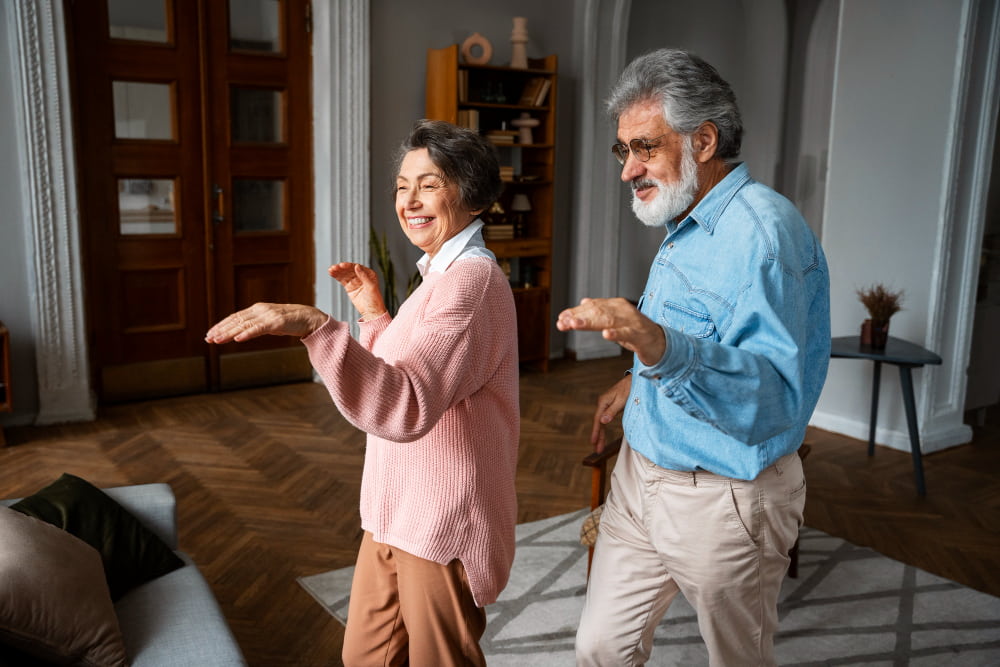
Dancing for seniors is an excellent way to stay active, social, and healthy. It can easily be adapted to suit individual needs and abilities, whether through classical dances or more modern styles. Whatever your level, there's always a dance that's right for you.
A variety of options, such as waltz, cha-cha, or even Zumba Gold, allow everyone to find an activity that combines enjoyment and safety. With good supervision and a few precautions, dancing becomes a real ally for your physical and mental well-being.
Dance at any age with DECIBEL
If you're looking to combine dance and cardio, DECIBEL® is perfect for you! Join our 45-minute sessions that mix dance and fitness to improve your stamina and tone your body.
Dance to energetic choreographies in a warm atmosphere. Our coaches will guide you to target your abs, thighs, and glutes, all to uplifting music and under calming lights.
At DECIBEL®, effort becomes a genuine pleasure! Book your spot in our Beaubourg studio now.