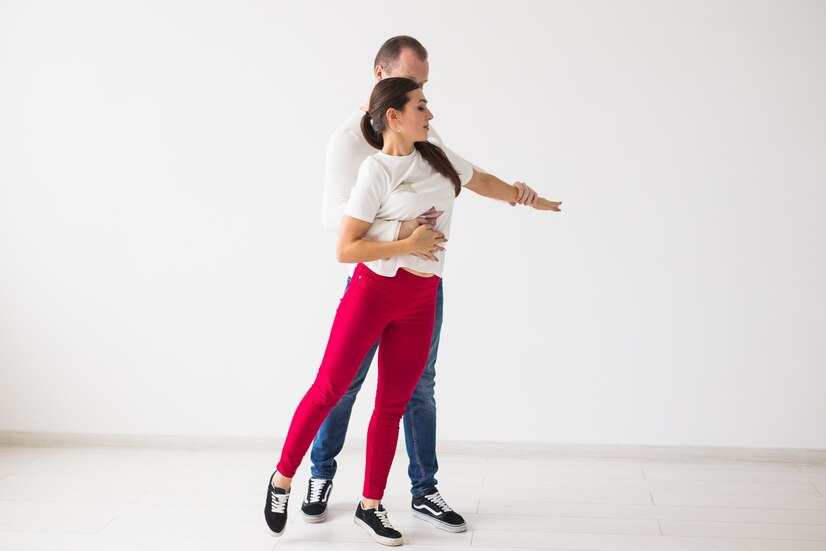
An introduction to step dance
Whether you are a beginner or simply curious, you will find all the information you need to get started with confidence. Step dancing is accessible to everyone, and its many physical and mental benefits will quickly win you over.
Definition and origins of step dance
There Tap dance is a form of rhythmic dance that relies on rapid, percussive foot movements, in sync with music. Its origins can be traced back to Irish traditions, but it has evolved through different cultures, notably with the rise of American step dance in schools and university competitions. The dance is characterised by fast and meticulous footwork, creating rhythmic sounds through stomps on the floor, often performed without musical accompaniment.
If we compare it to other forms of dance such as Tap dancing where the Clogging, step dance is distinguished by its precise footwork and the absence of arm movements, placing all the emphasis on the lower body. It is a dance that is both technical and artistic, drawing its roots from cultural expression while adapting to modern trends.
Popularity and benefits of step dance
There Tap dance is gaining popularity, especially among young adults of 25 to 35 years. This dance offers a perfect balance between intense physical activity and creative release. The benefits are numerous, both for the body and the mind.
Physically, step dancing improves endurance, tones the leg muscles, and strengthens coordination and balance. It is also an excellent way to to let off steam while having fun. Mentally, it stimulates concentration, releases stress, and offers a space for artistic expression accessible to everyone, even beginners.
Good news! Step dance is ideal for anyone new to dancing who wants to get involved in a dynamic activity. You don't need any particular technical skills or much experience to start. Just get going, follow the rhythm, and you'll quickly see progress while having fun!
Equipment needed to start step dancing
Suitable shoes
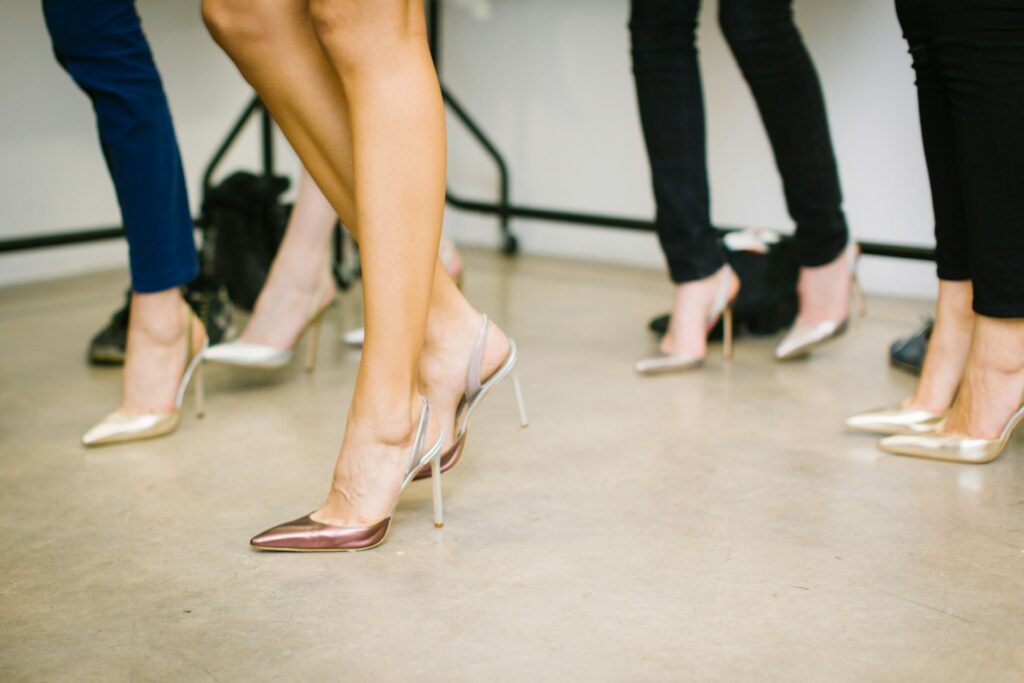
The choice of shoes is essential for getting started with step dance. It is recommended to opt for shoes Light with a thin, flexible sole. These characteristics ensure good reactivity during ground strikes and facilitate precise movements. Leather or suede dance shoes are often preferred as they offer an excellent balance between flexibility and durability.
Protecting your feet is also crucial. A good pair of shoes reduces the risk of injury, particularly when practising fast, sharp movements. Your feet need to be well supported to prevent twists and pain caused by repeated impacts on the ground.
Appropriate dress code
In addition to the shoes, a Comfortable outfit is essential for practising step dancing in the best conditions. Choose clothing respirators which facilitate your movements. Stretchy leggings or sports trousers and a fitted top will offer you both comfort and freedom in your travels.
Although not mandatory, some accessories can improve your performance, such as Knee pads to protect your joints during movements on the floor or shin guards to reinforce stability. You can also opt for a headband to prevent sweat from impairing your visibility.
Posture and basic technique in step dancing
Body position
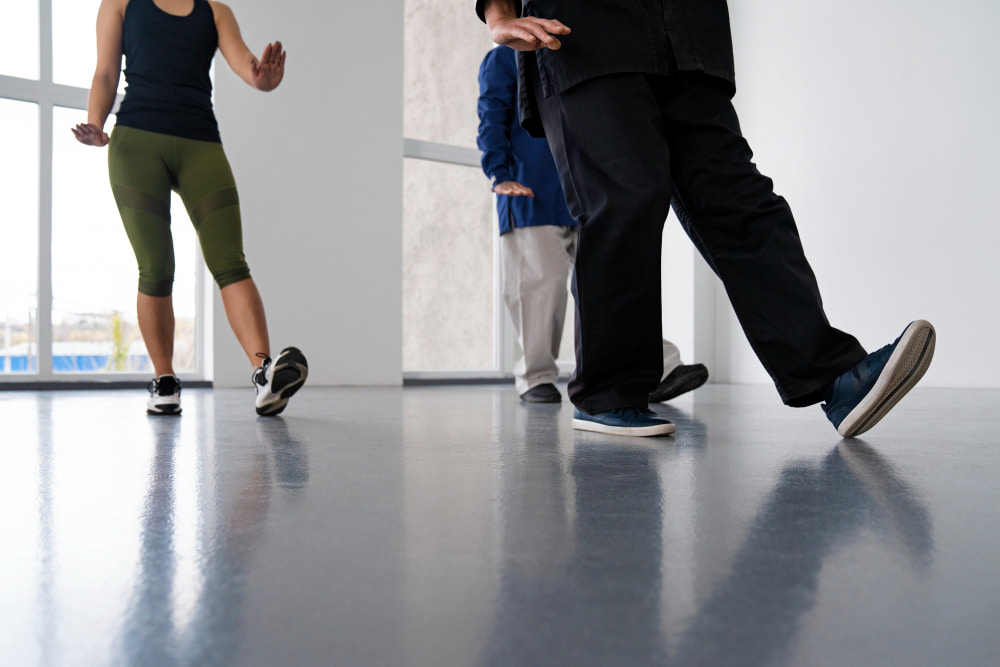
A good posture is essential for mastering step dance. The body should be aligned, with a straight spine and relaxed shoulders. It is important to Keep the torso stable while leaving the legs free to execute movements. This stability ensures better fluidity and allows you to maintain your rhythm without unnecessary effort.
The arms, though used less than in other dances, play an important role in balance. Keep them slightly bent and by your sides to stabilise the body during quick strikes. In summary: straight posture, relaxed shoulders, arms in support!
Fundamental movements
THE stamping of the foot form the heart of step dance. Each strike must be clean and precise, often accompanied by a percussive sound produced by the heel or toe. To get started well, concentrate on simple strikes, alternating your right and left foot.
There coordination The coordination between the upper and lower body is also crucial. Your feet keep the rhythm, while your arms help maintain balance. Initially, coordination might seem difficult, but with practice, you'll be able to string together quick movements with ease and fluidity.
The basic steps of step dance
The shuffle
THE Shuffle is one of the most popular basic steps in step dance. It consists of a series of rapid, sliding taps, alternating between the heels and the tips of the feet. This movement gives the impression of «gliding» across the floor, while remaining rhythmic. To execute a correct shuffle, it is essential to keep your feet close to the ground and to synchronize the beats with the music.
The shuffle offers many variations. You can speed it up or integrate it into more complex sequences. Try different combinations to add dynamism to your routines while staying true to the basics.
The stomp
THE stomp is another key movement in step dance. It is a powerful and unique striking of the foot against the ground, often used to mark a beat or conclude a sequence. To execute the stomp well, ensure your foot strikes the ground with force, whilst maintaining a stable posture. This creates a percussive sound that gives your dance impact.
This movement is often combined with other steps to enrich routines. You can integrate it into longer sequences or use it to mark rhythmic pauses. The stomp adds a touch of power and energy to each performance.
Rhythm and musicality in step dance
Understanding tempo
THE tempo is at the heart of step dancing. It represents the way you perform your movements, in time with the music. Understanding and following the tempo is essential for your steps to be fluid and harmonious. To familiarise yourself with rhythm, start by listening carefully to the regular beats music. This will help you anticipate when your feet need to hit the ground.
To improve your sense of rhythm, some simple exercises can help you. For example, walk in time with music of different tempos, and try tapping your foot along to the beat. The more you practise, the more you will naturally feel the tempo, without having to think about it.
Synchronisation with music
There synchronization is the ability to execute your movements in perfect coordination with the music. It's not just about following the tempo, but also about to feel the nuances of the melody and adjust your steps accordingly. In step dance, this means your beats must fall at the right moment to create a percussive and rhythmic effect.
A good way to practise is to work with different musical styles, From hip-hop to traditional music. Each style has its specificities, and knowing how to adapt will allow you to diversify your performances while staying in sync with the music.
Movement progression in step dance
Simple step combinations
Once you've mastered the basic steps like the Shuffle and the stomp, it's time to combine them to create smoother sequences. A good approach is to start with simple sequences. For example, alternate a shuffle with a stomp following a slow rhythm. This will help you strengthen your coordination and improve your muscle memory.
To memorise these sequences, it is useful to repeat regularly. You can also break down sequences into small parts and work on them individually before linking everything together. Little by little, these combinations will become natural, and you can increase the speed as you gain confidence.
Introduction to more complex figures
When you are comfortable with the basic steps, you can move on to complex figures. These movements include rapid sequences and variations that require more technique and precision. For example, more complex jumps or foot strikes can be incorporated into your routines.
One of the keys to making progress is to Practise regularly while gradually adding new elements. Don't rush: integrate each new step at your own pace. By repeating often, you will find ways to incorporate these figures into your basic sequences, thus creating more dynamic and varied choreography.
Fitness development for step dance
Endurance exercises
There Tap dance is a dynamic dance that heavily relies on your stamina. To progress and perform fluid sequences, it is important to improve your cardio. Exercises like the Exercising, THE Circuit training or even sessions of HIIT (High-Intensity Interval Training) can help you strengthen your respiratory capacity and maintain a steady pace for longer.
To obtain results, the regularity is essential. Incorporate at least three cardio training sessions per week into your routine. This will allow you to better manage fatigue and maintain stable performance throughout your step dance sessions.
Specific muscle strengthening
In step dance, your legs And ankles are constantly stressed. It is therefore crucial to strengthen these areas to prevent injuries and improve the accuracy of movements. Exercises such as squats, THE slots and the Calf raises are ideal for developing muscular power and endurance.
THE stretching are also essential for preventing injuries. Focus on stretches targeting your calves, thighs, and ankles after each session. Good flexibility will help you perform smoother movements and recover more quickly after intense exertion.
Evolution and styles of step dance
Different regional variants
There Tap dance has evolved into several regional styles, each with its own cultural influences. For example, the Step Irish dancing is characterised by extremely rapid foot movements, while the arms remain still. This style has a long history, with roots stretching back to traditional Celtic dances.
On the other hand, the American step dance, often popularised in universities and community groups, places more emphasis on collective energy and expression. It is frequently integrated into group performances, where the coordination of movements is essential for creating complex and visual rhythms.
Fusion with other dance genres
There Contemporary step dance continues to transform, notably by its fusion with other dance styles. Elements of are found hip-hop, of urban dance, and even of Tap dancing integrated into modern performances. This diversity allows dancers to explore new ways of expressing rhythm and pushing the boundaries of dance.
The incorporation of step dance into other disciplines, such as jazz or even ballroom dances, enriches its vocabulary and makes it accessible to a wider audience. This constant fusion demonstrates step dance's ability to adapt to new trends while remaining true to its rhythmic roots.
Conclusion
There Tap dance is an accessible and stimulating discipline, perfect for improving your physical condition while having fun in a club. By mastering the basic steps and following the rhythm, you can progress quickly, whether you are a beginner or more experienced.
The right equipment and good posture are essential for getting the most out of your sessions. Furthermore, the many styles and evolutions of step dance allow you to personalise your practice according to your musical and technical preferences.
Dance with DECIBEL
If you want to combine dance and cardio, DECIBEL® is the ideal option! Join our 45-minute sessions that blend dance and fitness to boost your endurance and sculpt your body.
Move to the rhythm of dynamic choreographies in a friendly atmosphere. Our coaches will accompany you to target your abs, thighs, and glutes, all to uplifting music and soothing lights.
With DECIBEL®, exercise becomes a real pleasure! Book your spot quickly in our Beaubourg studio.